Milliseid osi valmistatakse sepistamise teel?
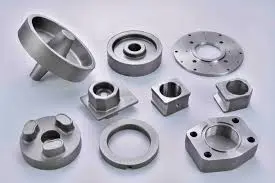
Forging is used to manufacture many metal components that must withstand repeated loads, impact, pressure, or demanding operating conditions. Typical osade sepistamine include crankshafts, connecting rods, gears, shafts, hubs, wheel components, flanges, hydraulic components, aircraft structural parts, and industrial tooling.
The process can be applied to steel, stainless steel, aluminum alloys, titanium alloys, and other metals, depending on the required properties and manufacturing conditions. Unlike casting, which forms a component by solidifying molten metal, forging shapes solid metal through controlled plastic deformation. The deformation can refine the material structure and create grain flow that follows important areas of the component. For this reason, forging is commonly considered when strength, toughness, fatigue resistance, and structural consistency are important. However, forging is not automatically the right process for every part. Part geometry, production volume, material, dimensional requirements, tooling cost, and secondary machining all need to be considered before selecting the manufacturing method.
Understanding How Forging Creates Metal Components
What Makes Forged Components Different?
Forging is a process that changes the shape of solid metal by exerting compressive force using a hammer, press, or other forming equipment. Depending upon the design, the material may be heated prior to shaping or processed at lower temperatures. Dies can be used to regulate the form and guide the flow of material to the necessary geometry.
Grain flow is a key feature of forged components. During deformation the internal structure of the material can be oriented relative to the shape of the portion. When the forging process is appropriately designed, this structure can be contributing to the mechanical performance of the components under cyclic loading.
It is for this reason that forged parts are so commonly used for shafts, connecting rods, gears, hubs, and other components that carry heavy mechanical loads. Welong's own forging information characterizes forged components as "produced by controlled deformation" and notes applications such as automotive and industry components.
Forging is not the same as machining or stamping. Machining is a manufacturing process in which material is removed from a billet, bar, or preformed blank to produce the desired dimensions. Stamping uses dies to shape sheet or plate material. Forging, however, deforms bulk metal to alter its shape.
Hot Forging and Cold Forging
The decision to use hot or cold forging is determined by the material, the size and shape of the item, and the tolerances and production goals.
The metal is heated to a temperature where it is easier to plastically distort. This is where hot forging takes place. The reduction in deformation resistance enables producers to create larger sections and more complex geometries without having to apply the same force that would be needed at ambient temperature. Steel is often hot forged to make parts including shafts, gears, connecting rods, flanges, and heavy machinery parts.
Cold forging is done at or about room temperature. Cold forming can give good dimensional precision and surface finish and also work hardening in suitable materials because the material is not heated to the same level. It is commonly used for small parts like fasteners and other high-volume precision parts.
There is also warm forging, which is an intermediate method between the typical hot and cold processes. It might be effective when the producers want a compromise between forming force, dimensional control, material flow, and surface quality.
So the right procedure depends on the part, not on some general presumption that one method of forging is always better.
Materials Commonly Used for Forged Parts
Choosing the material for osade sepistamine is usually one of the first engineering considerations made in a forging project. Where a combination of strength, toughness, wear resistance, and cost control is needed, carbon steel and alloy steel are commonly utilized. Materials are ideal for many shafts, gears, automotive components, industrial tools, and heavy equipment parts.
If corrosion resistance is a primary requirement, stainless steel can be chosen. Stainless steels have varying strengths, corrosion resistance, temperature capability, and forming qualities; therefore, the exact grade still needs to be matched to the operating environment.
Aluminum alloys are beneficial where it is vital to reduce the weight of components. Forged aluminum components are typically utilized in transportation, aerospace, and other applications where a relatively low density is desirable yet useful mechanical qualities are required.
Titanium alloys are used for applications requiring high specific strength and corrosion resistance, where weight is a factor. They are available in demanding aerospace and specialized industrial applications, but the material and processing costs are often more expensive than those of conventional steels.
Nickel-based alloys are also available in the form of forgings for high-temperature and severe mechanical applications. The material choice should therefore be based on real service conditions rather than simply on the strongest available alloy.
After forging, heat treatment may be employed to achieve the desired mix of hardness, strength, toughness, and dimensional stability. The choice of processes such as annealing, normalizing, quenching, and tempering will be based on the alloy and specification.
Types of Parts Made by Forging
Automotive Forging Components
One of the biggest areas of application of forged metal parts is the automotive industry. Forged parts may include crankshafts, connecting rods, steering knuckles, axle parts, wheel hubs, gearbox parts, and a few suspension parts.
Connecting rods are a nice example of this. The undergo repetitive tensile and compression loading when an engine operates; therefore, material characteristics and grain orientation are crucial considerations. Additionally, crankshafts must withstand cyclic loads and retain dimensional precision at the bearing and connecting surfaces.
Gears and other transmission components that must be strong and resistant to repeated loads are also made by forging. After forging, these parts may be precision machined and heat treated to meet the final dimensions and surface requirements.
Welong says its bespoke metal components business serves automotive customers, and its manufacturing capabilities include forging, casting, and machining.
Lennundus ja kõrgjõudlusega komponendid
The aerospace industry has exacting specifications for materials and manufacturing processes. Components made from forged aluminum, titanium, steel, and nickel-based alloy are utilized in structural and mechanical applications where weight, strength, fatigue performance, and dimensional control are important.
Examples are landing gear parts, structural fittings, engine-related parts, disks, shafts, and other load-bearing parts. The specific forging process and inspection requirements rely upon the alloy, geometry, applicable aeronautical specification, and function of the component.
The quality strategy may include non-destructive testing if appropriate. Selection of ultrasonic testing, magnetic particle testing, dye penetrant testing, radiographic testing, and dimensional inspection is based on the material and the application. Not all forged components need all methods. Therefore, inspection should be specified by drawing, specification, and quality plan.
Rasketehnika ja põllumajandustehnika
Heavy equipment makes use of many osade sepistamine since a lot of them are subjected to impact, vibration, bending, and repeated loading. Typical applications are hydraulic cylinders, shafts, hubs, pins, components for tracked vehicles, crane components, and other structural or mechanical parts.
Agricultural machinery has comparable needs. Tractors and harvesting equipment may operate in dusty, wet, dirt, and repetitive mechanical load situations. Toughness and structural uniformity are required for pieces where forged components can be considered.
The final choice still depends on the shape of the component and the loading conditions. If there are intricate interior cavities in a major structural element, it could be better to manufacture it by some other process. Forging might be a good choice for a solid load-bearing component.
Tööstus- ja energeetikaseadmed
Forged parts are also utilized in industrial machinery, oil and gas equipment, energy systems, valves, pressure-related components, and other engineered items.
Suitable grades of carbon steel, alloy steel, stainless steel, and special alloys may be forged into shafts, flanges, hubs, rings, connectors, and other components. Material specification, heat treatment, inspection standard, and dimensional requirements should be specified before manufacturing.
This is especially true in industrial procurement, where the word “forged” alone does not indicate the quality of a finished component. Buyers still have to select material grade, mechanical specifications, heat treatment, dimensions, tolerances, testing, and documentation.
How Does Forging Compare with Other Manufacturing Methods?
Forging Versus Casting
Casting is often selected when a component has complicated geometry, internal passages, thin sections, or features that would be difficult to produce through forging. It can also be economical for certain production volumes and geometries.
Forging has a different advantage. Controlled deformation can refine the material structure and create directional grain flow, which can be beneficial for components exposed to repeated mechanical loads.
Casting can experience defects such as porosity, shrinkage cavities, inclusions, and other discontinuities if the process is not properly controlled. However, it would be inaccurate to suggest that all cast components contain significant voids. Modern casting processes and inspection systems can control and detect many potential defects.
For procurement teams, the choice should therefore be based on geometry, material, volume, mechanical requirements, tooling investment, machining requirements, and total production cost rather than assuming that forging is always preferable.
Sepistamine versus mehaaniline töötlemine
Machining is highly flexible and can achieve precise dimensions and complex features without creating dedicated forging dies. It is particularly useful for prototypes, small production runs, and components that require substantial geometric customization.
The disadvantage can be material utilization. When a large amount of material must be removed from a billet to create a component, machining time and material waste can increase.
Forging can produce a preform much closer to the final geometry, after which machining is used for critical dimensions and surfaces. This combination is common for components that require both controlled material flow and tight dimensional tolerances.
For expensive alloys such as titanium, reducing unnecessary material removal may be especially relevant to the manufacturing cost. However, whether forging provides an economic advantage depends on production volume and tooling requirements.
Choosing Between Steel, Aluminum, and Titanium
Steel is often selected when high strength, stiffness, wear resistance, and cost efficiency are priorities. Alloy steel can provide additional performance characteristics through controlled composition and heat treatment.
Aluminum is useful when weight reduction is important. It may be considered for transportation and aerospace applications where reducing component mass can support system-level design objectives.
Titanium offers a combination of low density, high specific strength, and corrosion resistance, but its material and processing costs can be significantly higher. It is therefore generally considered for applications where its particular properties justify the additional expense.
The best material cannot be determined from the part name alone. Engineers need to consider loads, temperature, corrosion exposure, fatigue requirements, allowable dimensions, manufacturing route, and expected production volume.
Järeldus
Controlled metal deformation can impart valuable mechanical and structural properties. Osade sepistamine are utilized in the automotive, aerospace, heavy equipment, industrial machinery, energy, and other production industries. Typical applications include crankshafts, connecting rods, gears, shafts, hubs, flanges, hydraulic components, structural fittings, and specific aerospace components.
The correct forging process is determined by the material, geometry, production volume, temperature, tooling requirements, heat treatment, machining requirements, and inspection standards. Hot forging is usually used for larger or more difficult pieces to shape, while cold forging may be acceptable for smaller parts with good dimensional control.
When consumers choose forging parts, they should not simply consider the unit price. The examination should be thorough and include material certification, supplier quality systems, tooling capability, production capacity, inspection procedures, traceability, lead time, and technical communication. Since 2001, Welong says it has supplied specialized metal components to customers in several industrial sectors. Forging is one of its primary manufacturing skills.
In the case of custom forging parts, giving the supplier detailed drawings and specifications at the quotation stage will make it easier to assess the manufacturability, tooling, inspection, and production requirements.
KKK
1. What Materials Are Commonly Used for Forging?
Common forging materials include carbon steel, alloy steel, stainless steel, aluminum alloys, titanium alloys, and selected nickel-based alloys. The appropriate material depends on mechanical loads, temperature, corrosion exposure, weight requirements, production conditions, and applicable industry standards.
Steel is widely used for automotive and industrial components because different grades can provide a broad range of strength and toughness characteristics. Aluminum is useful when weight reduction matters, while titanium and nickel-based alloys are considered for more demanding applications where their specific properties justify higher material and processing costs.
2. What Are Examples of Parts Made by Forging?
Typical examples include crankshafts, connecting rods, gears, shafts, axles, hubs, flanges, rings, steering components, suspension components, hydraulic parts, crane components, and selected aerospace structural and engine-related parts.
The suitability of forging depends on the part's geometry and functional requirements. A component with a solid or relatively compact geometry and significant mechanical loading is often a more straightforward forging candidate than a component dominated by complex internal passages.
3. Are Forged Parts Stronger Than Cast Parts?
Forging can provide advantages in strength, toughness, fatigue performance, and material structure because controlled plastic deformation can refine the material and develop grain flow. However, there is no universal strength difference that applies to every forged and cast component.
The comparison depends on material grade, heat treatment, manufacturing parameters, geometry, defects, inspection, and design. Buyers should compare actual mechanical requirements and test results rather than choosing a process based only on the manufacturing method.
4. Can Forged Parts Be Customized?
Yes. Custom forging parts can be manufactured according to engineering drawings, samples, material specifications, dimensional tolerances, heat treatment requirements, surface requirements, and inspection standards.
Custom projects may require new dies or changes to existing tooling. Early communication between the buyer and supplier can identify design features that may increase tooling cost, machining requirements, or production time.
5. How Should I Request a Quote for Custom Forging Parts?
A useful RFQ should include the part drawing or 3D model, material grade, quantity, expected annual demand, tolerances, heat treatment, surface finish, inspection requirements, applicable standards, packaging requirements, and target delivery schedule.
If the component is already in production, previous inspection reports or material certificates can also help the supplier understand the required quality level. Providing this information at the beginning makes it easier to compare quotations on a like-for-like basis.
Partner with Welong for Custom Forging Parts
Welong describes itself as a China-based supply chain and manufacturing company established in 2001, with more than 20 years of experience and ISO 9001:2015 certification. Its published capabilities include forging, sand casting, investment casting, centrifugal casting, and machining, with customized metal components supplied for industries including automotive, aerospace, oil and gas, and industrial manufacturing.
For buyers sourcing custom osade sepistamine, the engineering process can begin with a drawing, sample, material requirement, or technical specification. Welong states that its engineering team works with AutoCAD, Pro-Engineering, and SolidWorks files and supports design optimization for customized components.
When preparing an inquiry, buyers can provide the part drawing, material grade, quantity, heat treatment requirements, tolerances, inspection standards, and delivery expectations. These details allow the supplier to evaluate the forging route and determine the appropriate tooling, machining, testing, and quality documentation for the project.
Saatke meile info@welongpost.com et rääkida oma sepistatud detailide vajadustest, saada hindu või saada lisateavet selle kohta, kuidas meie kohandatud lahendused saavad teie tarneahelat aidata ja teie tooteid paremini tööle panna.
Tehtud tööd
1. Ameerika Metallide Ühing. „Sepistamise protsessid ja seadmed: põhjalik juhend kuum- ja külmsepistamise tehnikate kohta.“ ASM International Handbook Series, 14A köide, 2018.
2. Altan, T., Ngaile, G. ja Shen, G. „Külm- ja kuumstantsimine: alused ja rakendused.“ ASM International Materials Park, Ohio, 2005.
3. Semiatin, SL „Metallitöötlus: massvormimine – ASM käsiraamat.“ ASM International, 14A köide, 2005.
4. Thomas, A. „Sepistamistööstuse Assotsiatsiooni tehniline aruanne: materjalide valik ja protsesside optimeerimine.“ Sepistamistööstuse Assotsiatsioon, Cleveland, 2019.
5. Groover, MP „Kaasaegse tootmise põhitõed: materjalid, protsessid ja süsteemid.“ John Wiley & Sons, 6. trükk, 2016.
6. Dieter, GE ja Bacon, D. „Mehaaniline metallurgia: rakendused sepistamisel ja metallide vormimisel.“ McGraw-Hill Education, 4. väljaanne, 2020.

Share your inquiry, get the quotation accordingly!

Hiina WELONG - teie usaldusväärne partner metallilahendustes

