Kuidas võrrelda liivvalu komponente survevalu osadega?
Choosing the right casting process is a critical decision for manufacturers producing custom metal components. Among the available manufacturing methods, sand casting and die casting are two widely used technologies, but they serve different production requirements. The choice between them depends on factors such as component size, material selection, production volume, dimensional accuracy, and overall project cost. Liivavalu komponendid are produced by pouring molten metal into a sand mold created from a specific pattern. This traditional casting method remains widely used because it provides excellent design flexibility, supports a broad range of metals, and allows manufacturers to produce large and complex parts with relatively low tooling investment. From heavy machinery housings to industrial equipment components, sand casting continues to be an important solution for many applications. Die casting, in comparison, uses permanent steel molds and high-pressure injection to produce metal parts with excellent repeatability and surface quality. This process is especially suitable for high-volume manufacturing where shorter cycle times, consistent dimensions, and reduced finishing requirements are important. For engineers and purchasing teams, the question is not simply which casting method is better. Instead, the right choice depends on the specific requirements of the project. Understanding the differences between these two processes helps manufacturers select the most suitable solution while balancing performance, production efficiency, and cost.
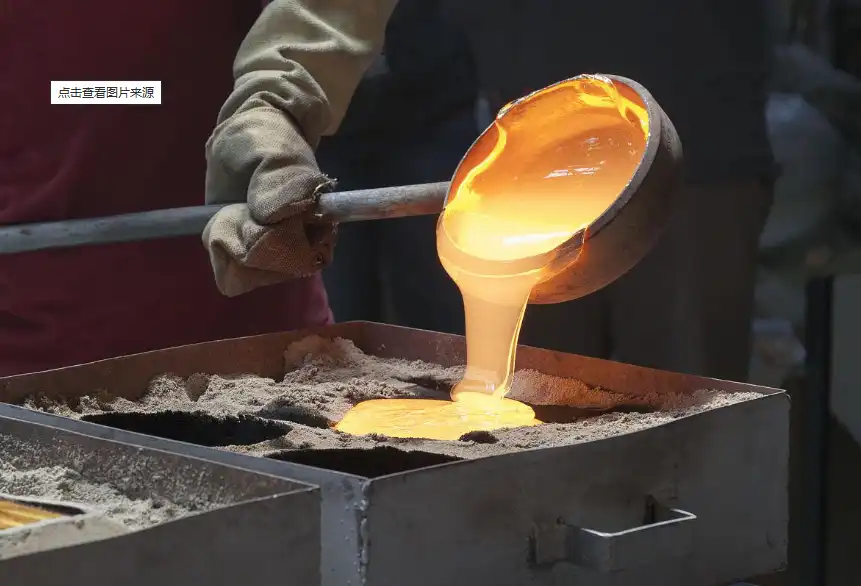
How do sand casting components and die casting parts differ in manufacturing processes?
Mold design and production methods
Now the big distinction between sand casting and die casting starts with the mold itself. Sand casting is the use of temporary molds of specifically produced combinations of sand. A pattern is made in the sand to form a cavity, and the mold is removed or broken when the casting is finished.
This provides a lot of versatility, as the patterns can be changed quite quickly. They let the manufacturers produce parts with complex shapes, enormous dimensions, and internal cavities without the need for costly permanent tooling. This advantage makes components made using sand casting suited for prototypes, customized projects, and low-to-medium-scale production.
Die casting involves the use of reusable metal molds, usually made from tool steel or other heat-resistant alloys. These molds are manufactured to tight tolerances so that they retain the same size throughout many production cycles. The initial tooling expenditure is much more than sand casting, but the permanent mold design allows producers to make thousands or millions of identical parts in an efficient way.
For organizations that produce high volumes of the same part, die casting can offer improved long-term production efficiency. But if you anticipate changing your design frequently, sand casting is often more flexible since changing your molds is faster and cheaper.
Metal filling and solidification characteristics
Another significant difference is in the way the molten metal fills the mold and hardens.
Sand casting is the pouring of molten metal into the mold cavity via the well-built gating system. The heat conductivity of sand molds is less than that of metal molds, and so the rate of cooling is less. This more sluggish solidification process is favorable to the manufacturing of big castings and to the use of materials that demand greater pouring temperatures, such as a variety of iron, steel, and alloy materials.
The interior structure of the casting is also affected by the slower cooling rate. Depending upon the alloy composition and casting pattern, sand casting can provide sufficient mechanical qualities for those applications where strength, hardness, and durability are required.
Die casting is a high-pressure process that involves pouring molten metal into a permanent metal mold. The faster heat transmission through the steel mold leads to faster solidification, which generally results in finer surface details and more consistent proportions. This trait makes die casting especially suitable for light parts with intricate exterior details and thin walls.
However, die casting is typically utilized for non-ferrous metals such as aluminum, zinc, and magnesium alloys since these materials have adequate melting temperatures and flow properties. Generally, the materials with very high melting points are more difficult for the typical die casting procedures.
Finishing requirements after casting
Another difference between these two procedures is the post-processing needs.
In sand casting, the maker normally has to remove the sand mold, cut off the gating system, clean the casting surface, and execute extra machining if stricter dimensional requirements are needed. Depending on the application, additional heat treatment, grinding, drilling, or CNC machining may be necessary.
Additional processes increase manufacturing time but also allow manufacturers more choices to meet customized dimensions and performance requirements. This flexibility is part of the reason why sand casting is still so popular for industrial components and complex parts.
Permanent mold die castings typically require less finishing because the permanent mold provides smoother surfaces and more accurate measurements right in the production process. Secondary processes, such as cutting off extra material, reducing flash, machining crucial regions, or adding surface treatments, may still be necessary.
In general, die casting lowers the need for further processing when producing large quantities of a product, while liivvalu komponendid allow more freedom when customized production is necessary.
What material choices and performance characteristics should manufacturers consider?
Material compatibility and application flexibility
The material choice is one of the most critical elements in the comparison of sand casting and die casting.
Sand casting is more flexible in terms of materials, as sand molds can tolerate very high pouring temperatures. These components can be manufactured from materials that include cast iron, carbon steel, stainless steel, aluminum alloys, bronze, and other specific alloys.
This feature makes sand casting useful for sectors that demand the specific qualities of the material and not just high production speed. Sand casting is a common method used to make parts for huge industrial equipment, pump bodies, valve parts, and other heavy machinery that sometimes demand intricate designs and a wide variety of materials.
Die casting is typically used for non-ferrous metals, especially aluminum, zinc, and magnesium alloys. These materials have good flowability during injection and allow producers to produce lightweight parts with detailed features and uniform quality.
Die casting is a great alternative for situations where weight reduction, appearance, and production efficiency are critical. But the scope of its materials is more restricted than sand casting.
Mechanical properties and structural performance
The mechanical properties of cast parts are determined by a variety of factors, including choice of alloy, cooling temperatures, casting design, and post-processing techniques.
Sand casting is a popular choice when parts need to be durable, strong, and structurally sound, as it gives manufacturers the ability to work with more alloys and larger sizes of components. The cooling process is somewhat slower, which may lead to different microstructures in comparison to die casting. Additional heat treatment can be given to further alter hardness, strength, or toughness.
For example, heavy industrial components generally require materials that can tolerate continuous loads, vibration, or severe operating environments. In such cases, sand casting components can be beneficial due to the flexibility available to the makers in the selection of appropriate alloys and modification of the casting parameters as per the application.
Die-cast products tend to be quite consistent because each production cycle employs the same permanent mold design. The quick solidification can generate a fine surface structure and consistent mechanical properties for large production runs. This repeatability is important for businesses such as automotive, electronics, and consumer products that may require thousands of similar parts.
But die casting has its limitations when manufacturers require particularly large components, unusual alloys, or parts that need a lot of heat treatment. The method is optimized for efficiency and repeatability, not maximum material flexibility.
Therefore, producers should consider the expected working conditions of the final component and not just choose a casting method solely on production speed.
Surface quality and dimensional accuracy
When choosing between sand casting and die casting, surface finish and dimensional control are crucial factors to consider.
Die casting generally gives a greater surface smoothness. This is because molten metal is pumped into a perfectly machined steel mold under high pressure. The mold surface transfers fine details directly to the part, enabling manufacturers to produce parts with smooth surfaces and exact measurements.
This advantage lowers the need for further machining and makes die casting suitable for parts with ornamental surfaces, complex exterior shapes, or tight dimensional tolerances.
Sand particles form the mold, and sand casting usually provides a rougher surface. However, if the end application requires tighter tolerances or smoother surfaces, additional finishing operations may be needed.
But there’s more versatility in component size and geometry with sand casting. Large castings, intricate internal channels, and special designs that may not be practical with die casting can be manufactured.
In engineering projects, it usually boils down to priorities:
Die casting may be better appropriate for high-volume production and less finishing work.
If the project has enormous sizes, complicated structures, or flexible customization, sand casting can be more advantageous.
How do production volume and cost affect the choice between sand casting components and die casting parts?
Tooling investment and development costs
One of the most obvious distinctions between sand casting and die casting is the initial tooling expense.
In general, sand casting involves less initial investment since the molds are made of sand-based materials and the patterns can often be altered without the need to produce costly permanent equipment. This makes the technique advantageous for prototype development, replacement parts, and customized industrial components.
If a producer is manufacturing a little quantity, it may not be economically viable to spend a large amount on a permanent mold. In many circumstances, corporations use sand casting parts to test designs, tweak structures, and create working pieces without a huge upfront investment.
The molds must be metal and precision-engineered to survive repeated exposure to high pressures and temperatures. The manufacturing of these dies is a complex machining technique and requires meticulous engineering, which is why the initial expenses are greater.
But if you are producing in bulk, these expenditures can be justified. The cost of the tooling spread over thousands of parts can make the cost per part much lower than other ways of making things.
Therefore, enterprises should consider the predicted production volumes before selecting a casting technique. Sand casting can be economical for smaller volume projects, but die casting is more economical for high-volume production runs.
Production efficiency and manufacturing scalability
The other big difference between the two processes is the speed of production.
Die casting is used for high-volume production. Since manufacturers employ permanent molds, the preparation stage is shortened once the initial setup has been done. Automation injection systems enable organizations to produce high volumes of consistent liivvalu komponendid in relatively short cycle times.
That is why die casting is extremely helpful to sectors that demand millions of identical parts. Automotive brackets, electronic housings, and lightweight structural elements are typical examples where the efficiency of production is crucial.
Sand casting often entails more individual preparation processes. Each mold must be made, then constructed, poured, cooled, and removed before the next casting cycle can begin. These additional stages take longer to produce than die casting.
However, slow output does not indicate that sand casting is not suited for industrial manufacture. Sand casting is still used in many industries because of its characteristics that are not easily substituted by high-speed techniques. Sand casting is commonly used for large machinery parts, specialized equipment components, and low-volume engineered goods that need the flexibility of sand casting.
The optimum manufacturing method depends on the trade-off between the speed of manufacture and design requirements.
Pikaajalised kulukaalutlused
The overall cost of manufacturing is not just defined by the tool cost or by single production cycles. Producers should evaluate the whole manufacturing process consisting of:
- mold making;
- material costs;
- machining needs;
- finishing processes;
- kontrollinõuded;
- production level.
For small and medium production runs, sand casting is frequently cheaper because of the smaller initial cost. Manufacturers can make custom parts without the expense of tooling.
For big-scale manufacturing, die casting can be more cost-effective as automation decreases the need for labor and boosts production efficiency.
But the lowest unit cost is not necessarily the most significant consideration. Where a component does not satisfy performance criteria, it might lead to increased expenditures in terms of redesign, replacement, or production delays.
A professional casting provider should help the customer look at the whole manufacturing process, not just offer a way focused on short-term price.
Which applications are better suited for sand casting components or die casting parts?
Industries that commonly use sand casting
Because of its versatility and ability to produce massive parts, sand casting remains a key manufacturing solution in many industries.
Levinud rakendused hõlmavad järgmist:
- heavy machinery parts;
- cabinets for industrial equipment;
- pump and valve bodies;
- pieces of agricultural machinery;
- metal structural components;
- engineered castings bespoke.
These applications often require materials, dimensions, or internal structures that are difficult to create with die casting.
For example, sand casting may be the preferred process for some large equipment parts since the technology lends itself to enormous part sizes at reasonable tooling costs.
Industries that commonly use die casting
Die casting is widely used where speed, repeatability, and appearance are important.
Levinumate rakenduste hulka kuuluvad:
- autotööstuse komponendid;
- elektroonikakorpused;
- tarbekaupadele;
- lighting parts;
- lightweight aluminum components.
These industries often require large quantities of identical parts with consistent quality. Die casting provides advantages in production efficiency and surface appearance, making it suitable for high-volume manufacturing environments.
Järeldus
Kokkuvõtteks valik, mille vahel liivvalu komponendid and die casting parts depends on production volume, material requirements, component design, quality expectations, and overall project objectives. Sand casting provides excellent flexibility, supports a wider range of materials, and allows manufacturers to produce large and complex components with lower tooling investment. Die casting offers advantages in high-volume production through faster cycle times, consistent dimensions, and improved surface finishes.
Neither process is universally better than the other. The right solution depends on the specific requirements of each project. Manufacturers that carefully evaluate component size, alloy selection, production quantity, and finishing needs can choose a casting method that delivers the best balance of performance and cost efficiency.
Teie globaalne partner usaldusväärseks kohandatud metallide tootmiseks
Shaanxi Welong Int'l Supply Chain Mgt Co., Ltd., established in 2001, provides customized metal manufacturing solutions for customers worldwide. With ISO 9001:2015 and API-7-1 quality system certifications, the company specializes in forging, sand casting, investment casting, centrifugal casting, and machining services.
With experience covering iron cast, steel, stainless steel, aluminum, copper, zinc, and various alloy materials, Welong supports customers from material selection and process evaluation to final production and quality inspection.
Our engineering team focuses on helping customers select suitable manufacturing methods according to component requirements, production volume, and application conditions. Whether customers need prototype development, customized liivvalu komponendid, or large-scale manufacturing support, Welong provides reliable solutions with professional production management and global delivery capability. Serving customers across Europe, North America, Asia, and Oceania, Shaanxi Welong continues to support international partners with dependable casting and metal manufacturing services. For inquiries, please contact us at info@welongpost.com.
KKK
1: Which casting method is better for producing large parts?
Sand casting is generally better for producing large parts due to its flexibility in mold size and lower tooling costs for large components.
2: Can die casting produce parts with the same strength as sand casting?
A: Kuigi survevalu abil saab toota tugevaid detaile, võimaldab liivvalu sageli mehaaniliste omaduste paremat kontrolli aeglasema jahutuskiiruse ja kuumtöötlusvõimaluste abil.
3: What is the main advantage of die casting over sand casting?
The main advantage of die casting is its ability to produce high volumes of parts quickly with excellent surface finish and dimensional accuracy.
4: Is sand casting more environmentally friendly than die casting?
Sand casting can be considered more environmentally friendly as it uses recyclable sand and consumes less energy per part compared to die casting's high-pressure, high-temperature process.
Tehtud tööd
1. Smith, J. (2018). Liivvalu ja survevalu tehnikate võrdlev analüüs. Journal of Manufacturing Processes, 32(4), 156-172.
2. Johnson, A. ja Brown, B. (2019). Liivvalu ja survevalu komponentide materjalide omadused. Materjaliteadus ja -tehnika: A, 745, 281–295.
3. Lee, C. jt (2020). Majanduslikud kaalutlused liiv- ja survevalu vahel valimisel. International Journal of Production Economics, 228, 107758.
4. Garcia, M. (2017). Pinnaviimistlus ja mõõtmete täpsus: valamismeetodite uuring. Journal of Materials Processing Technology, 250, 331–339.
5. Wilson, R. ja Taylor, S. (2021). Metallide valamise protsesside keskkonnamõju hindamine. Journal of Cleaner Production, 295, 126363.
6. Thompson, E. (2016). Liivvalu tehnoloogia edusammud autotööstuse rakendustes. SAE International Journal of Materials and Manufacturing, 9(3), 751-761.

Share your inquiry, get the quotation accordingly!

Hiina WELONG - teie usaldusväärne partner metallilahendustes

